Manuscript Style
MOBILITY HUMANITIES Manuscript Style Guidelines
Mobility Humanities adheres to the MLA style. View the MLA guidelines (https://style.mla.org/works-cited/works-cited-a-quick-guide) to ensure your manuscript conforms to this reference style.
The language of the journal is British English. Spelling should be consistent throughout.
Formatting
- The document must be set at the US letter standard size. The entire document (including notes) should be double-spaced with 1-inch (2.5 cm) margins on all sides and no extra spaces between paragraphs. A 12-point standard font Times New Roman is required for all text, including headings and notes. Unusual characters or diacritics should be flagged by placing the entire word in red type, as they may not translate correctly in typesetting.
Abstract/Keywords
- The article must include an approximately 200-word abstract and 5 to 8 keywords.
- The abstract should not duplicate the text verbatim but rather include the research question or puzzle, identify the data, and give some indication of the findings.
- Keywords should be drawn from the content and not duplicate the article title, placed below the abstracts, and separated by commas. All the first letter of the keywords should be capitalized.
Quotations
- Short prose quotations (up to four lines) should be retained (with quotation marks) within the body of the text.
- Use double quotation marks, and only use single quotation marks for quotes within quotes.
- Spelling within quotes should reflect the original.
Block Quotations
- A quotation that runs more than four lines in the manuscript should be set off from the text as a block indented half an inch from the left margin, as separate paragraph and without quotation marks.
- In general, the prose introducing a quotation displayed in this way should end with a colon.
- A parenthetical citation for a prose quotation set off from the text follows the last line of the quotation. The punctuation mark concluding the quotation comes before the parenthetical citation; no punctuation follows the citation.
Emphasis
- Use “double” quotations marks for emphasis.
- The journal approves the use of Italics mainly for the book titles or foreign languages.
Two or More Works by the Same Author
- If two or more works appear under the same author name or names in the works-cited list, a title should be added to in-text citations so that readers know which work is referred to.
- If lengthy titles of books or articles are referred in the text, the shortened forms of titles should be used.
- One of the following three ways should be used.
Author’s name in prose and title in parenthetical citation
- Morrison writes, “Places, places are still there. If a house burns down, it’s gone, but the place—the picture of it—stays” (Beloved 35).
Author’s name and title in prose
- As Morrison writes in Beloved, “Places, places are still there. If a house burns down, it’s gone, but the place—the picture of it—stays” (35).
Author’s name and title in parenthetical citation: Please note that, in this case, a comma must be added between the author’s name and the book title.
- The character Sethe notes, “Places, places are still there. If a house burns down, it’s gone, but the place—the picture of it—stays” (Morrison, Beloved 35).
Figures
- Any type of illustrative visual material—for example, a photograph, map, line drawing, graph, or chart—should be labeled Figure (abbreviated Fig.), assigned an arabic numeral.
- The title of the figure and the source information should be provided below the image.
- Both the figure and the caption must be center aligned.
- For the artwork, artist name, artwork name, creation year, location information should be provided as a caption.
- Fig. 1. Berthe Morisot. Reading. 1873, Cleveland Museum of Art.
Tables
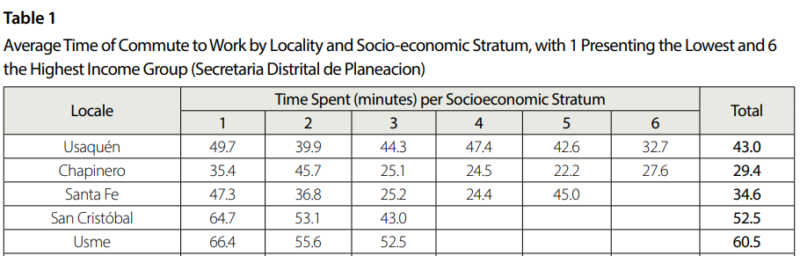
- Tables must be numbered and titled.
- The title of the table should be provided above the table.
Bibliographical Footnotes
- Citation information should be placed as in-text citations. However, the author may provide additional reference information as footnotes in the following styles.
- See Nail, Being and Motion, esp. ch. 20.
- See Nail, Being and Motion 25-40.
- See Nail, Being and Motion.
Funding, Acknowledgements, ORCID
- The additional information such as funding, acknowledgements and ORCID should be placed in that following order, preceding the list of Works Cited.
- Funding
- Acknowledgements
- ORCID
Works Cited
- All sources cited in the text must be included alphabetically in a “Works Cited” reference list.
- For two or more works by the same author, list the works alphabetically, not by date.
- Abbreviate “University Press” as UP.
- For websites, give the date accessed, accordingly abbreviated (e.g. Oct. 2022).
- Citation information for interview data should include: the names of the interviewee and the interviewer, and the date of the interview conducted. “Little” is the name of the interviewee and “Pooley” is the name of the interviewer in the following example: Little, Rhona. Interview. Conducted by Coline G. Pooley, Mar. 1996.0
- When a DOI is available for the articles, include it in the Works-Cited-List entry. The DOI should be preceded by http:// or https://.
- Omit the first sets of repeated digits of the page numbers. For example, the digit in the hundreds place is repeated between 125 and 150, so 1 from 150 in the citation must be omitted: pp. 125-50
- The edited volume was edited by more than one editor, the plural form of editor (= editors) should be used for citation information: Sánchez Prado, Ignacio M., editor. Mexican Literature in Theory. Bloomsbury Academic, 2018; Gilbert, Sandra M., and Susan Gubar, editors. The Female Imagination and the Modernist Aesthetic. Gordon and Breach Science Publishers, 1986.
- For a book, the editors’ name should be followed by “. Edited.” Yet, for a book chapter, the editors’ name should be followed by “, edited”: E.g) Wollstonecraft, Mary. A Vindication of the Rights of Woman. Edited by Deidre Shauna Lynch, Norton Critical Edition, 3rd ed., W. W. Norton, 2009; Dickinson, Emily. “I heard a Fly buzz—when I died—.” The Poems of Emily Dickinson, edited by R. W. Franklin, Harvard UP, 1999, pp. 265–66.